What is the largest bronze sculpture in the Western Hemisphere?
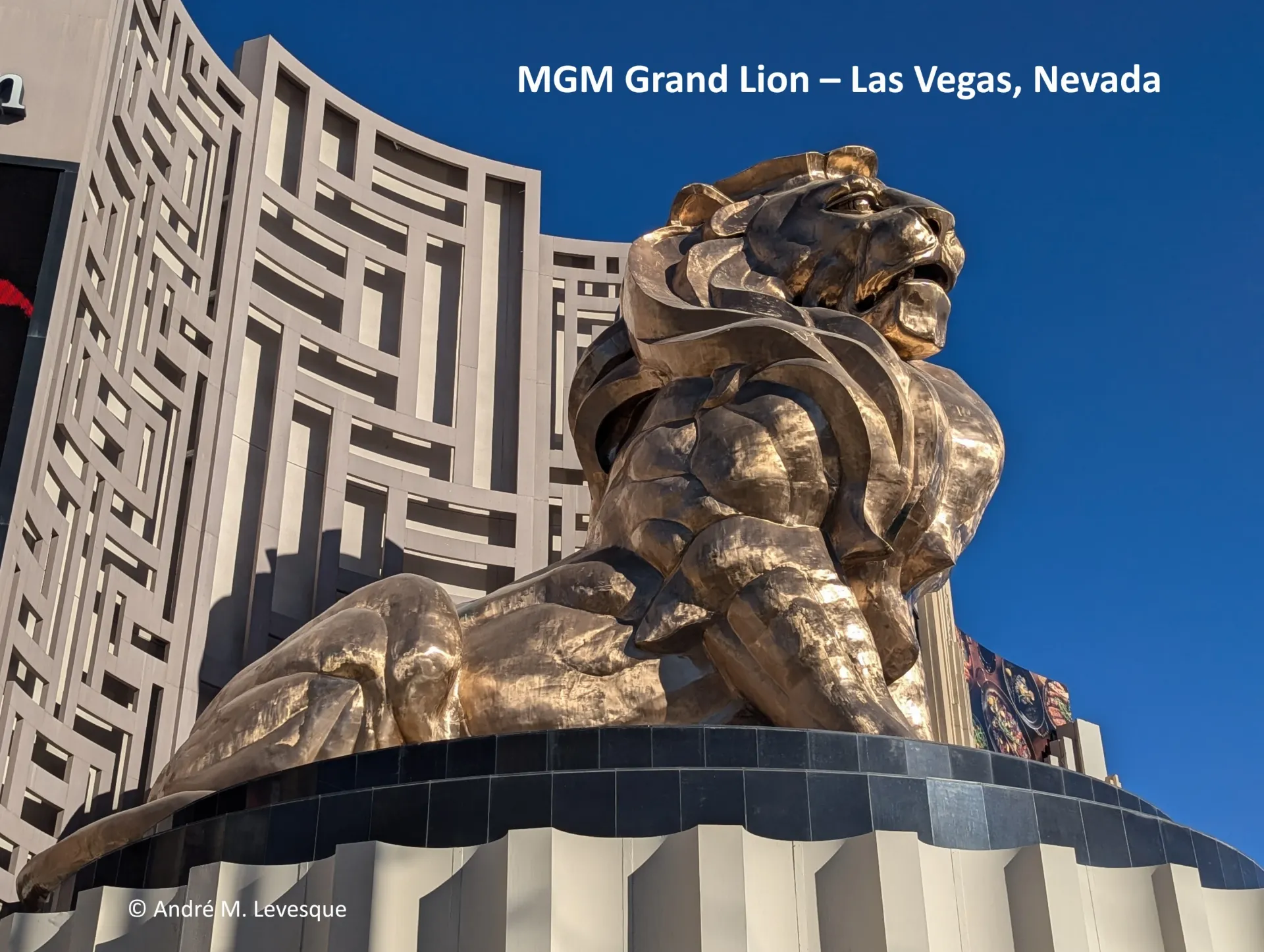
The MGM Grand Lion, located at the intersection of Las Vegas Boulevard and Tropicana Avenue in Las Vegas, Nevada, holds the distinction of being the largest bronze sculpture in the Western Hemisphere. Standing prominently at the main entrance of the MGM Grand Las Vegas as a regal guardian, this massive figure represents ‘Leo,’ the mascot of Metro-Goldwyn-Mayer studios.
The statue was commissioned as part of a $250 million renovation project that began in the mid-1990s. It replaced an earlier, 80-foot-tall fiberglass lion's head entrance where visitors walked through the beast's mouth. This original design was scrapped because many guests, particularly high-rolling Asian gamblers, considered walking through a predator's mouth to be bad luck. The new bronze lion was designed to provide a more majestic, inclusive welcome while maintaining the brand's iconic mascot.
The sculpture was designed by British figurative sculptor Martin Smeaton (b. 1948) and created by renowned artist and Utah-born Snellen “Snell” Johnson (1929-2001), who specialized in large-scale wildlife figures. To achieve its colossal scale, Johnson first sculpted a foam mold, which was then used to cast 1,660 individual bronze panels. These pieces were shipped from Scottsdale, Arizona, to Las Vegas in 22 large sections and welded together on-site over a massive internal steel armature.
In terms of size, the lion stands 45 feet tall and 50 feet long. It is perched upon a 25-foot-tall pedestal, bringing its total height to 70 feet above the ground. The entire structure is a true heavyweight, tipping the scales at 50 tons (approximately 100,000 pounds).
The statue was officially installed and unveiled on 16 February 1998, coinciding with the completion of the resort's transition into the "City of Entertainment". Since its debut, the bronze lion has become one of the most photographed landmarks on the Las Vegas Strip, celebrated for its craftsmanship and sheer engineering scale.